Bishnoi Village Safari Jodhpur
The Immortal Legend Of The Khejarli Sacrifice
Step back into September 1730 AD when Amrita Devi Bishnoi and 363 brave men and women laid down their lives to protect green Khejri trees from royal axes in Jodhpur. Discover the world's supreme act of environmental martyrdom that inspired India's modern Chipko movement.
Event Quick Facts
Historical Event- Date: September 12, 1730 AD (Bhadrapad Shukla Dashami)
- Leader: Amrita Devi Bishnoi
- Sacred Martyrs: 363 Bishnoi Men, Women & Youth
- Location: Khejarli Village (26 km South of Jodhpur)
- Outcome: Royal Copper Plate Decree Banning Hunting & Tree Felling
The Royal Demand For Lime Kiln Fuel (1730 AD)
In the autumn of 1730 AD, Maharaja Abhai Singh of Jodhpur commenced construction of his grand new palace (*Phool Mahal*) inside Mehrangarh Fort. Building required large quantities of lime mortar (*Chuna*).
To bake the lime in open desert kilns, royal minister Giridhar Bhandari dispatched a troupe of armed soldiers and woodcutters to Khejarli Village, located 26 km south of Jodhpur. The village was named after its dense groves of sacred green Khejri (Prosopis cineraria) trees, meticulously protected for centuries under Guru Jambheshwar Ji’s 19th vow.
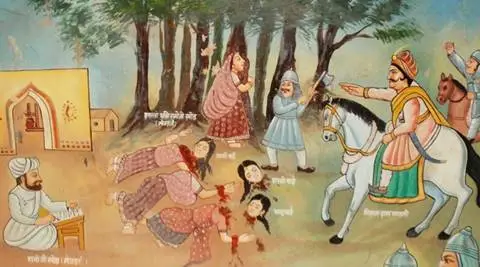
Amrita Devi Bishnoi's Immortal Embrace & Words
When royal woodcutters raised their axes against a green Khejri tree, Amrita Devi Bishnoi stepped forward. She protested gently, pleading that cutting green living trees violated the Bishnoi community's 29 eco-vows.
When soldiers demanded bribes or faced execution orders, Amrita Devi wrapped her arms tightly around the trunk of a Khejri tree and uttered the immortal Marwari lines:
The ruthless soldiers struck down Amrita Devi. Seeing her courage, her three young daughters—Asi, Ratni, and Bhagu—followed their mother and wrapped themselves around neighboring trees, accepting martyrdom without fear!
Timeline Of The 1730 AD Khejarli Massacre
How a quiet morning in a Thar village turned into the most extraordinary demonstration of non-violent environmental defense in human history.
Royal Soldiers Arrive in Khejarli
Giridhar Bhandari and royal soldiers arrive with axes to cut green Khejri trees for royal palace lime kilns. Amrita Devi Bishnoi protests their entry.
First Sacrifice (Amrita Devi & Daughters)
Amrita Devi hugs a tree and utters her famous vow. She and her three daughters (Asi, Ratni, Bhagu) are martyred by royal axes while protecting the green grove.
Panchayat Call Across 84 Bishnoi Villages
Runners ride across 84 neighboring Bishnoi villages. Hundreds of elders, youth, and women march to Khejarli, taking a collective oath to embrace trees (*Rookh Rikhola*).
363 Villagers Embrace Trees & Accept Martyrdom
A total of 363 Bishnoi men, women, and newlywed couples voluntarily step forward one by one, hugging Khejri trees until 363 lives are sacrificed for forest conservation.
The Maharaja's Apology & Royal Copper Plate Mandate
When news of the horrific 363 deaths reached Maharaja Abhai Singh in Jodhpur, he immediately halted construction, rushed to Khejarli to ask forgiveness, and issued a historic royal decree.
1. Total Prohibition On Felling Green Trees
The royal decree (*Tamra Patra* or Copper Plate mandate) legally forbade anyone—including royal soldiers and state officials—from cutting any green tree within the boundaries of all Bishnoi villages forever.
2. Permanent Ban On Hunting & Poaching
Hunting wild Blackbucks, Chinkara gazelles, and birds was declared a major criminal offense inside Bishnoi territories, establishing the region as an official royal sanctuary.
3. Heavy Financial Fines & Punishment
The decree stipulated that any violator cutting a tree or firing a gun near Bishnoi villages would face severe state penalties, confiscation of property, and imprisonment.
Inspiration For The Chipko Movement & National Eco-Awards
The 1730 AD Khejarli sacrifice is recognized globally as the pioneer of non-violent environmental resistance. In the 1970s, legendary environmentalist Sunderlal Bahuguna adapted Amrita Devi’s tree-hugging strategy to start the famous Chipko Movement in the Himalayas.
Today, the Ministry of Environment, Forest and Climate Change (Government of India) awards the prestigious Amrita Devi Bishnoi National Award to individuals and organizations showing extraordinary courage in wildlife and forest protection.

Visiting Khejarli Sacred Memorial On Your Bishnoi Safari
When you book an extended or Full Day Bishnoi Village Safari with native local host Bhagirath Bishnoi, you get to experience this living history in person:
Pay Homage At The Khejarli Martyr Monument
Walk through the sacred memorial park where 363 martyrs gave their lives. View the historic stone monument engraved with martyr names and surrounding green Khejri trees.
Annual Khejarli Mela (Bhadrapad Festival)
Every September on *Bhadrapad Shukla Dashami*, thousands of Bishnois gather at Khejarli for an annual fair, chanting sacred prayers and planting hundreds of new Khejri saplings.
Hear Stories From Native Local Descendants
Our native village guides are born-and-raised in the surrounding hamlets. Hear oral folklore and traditional Marwari ballads passed down through generations.
Unfenced Blackbuck Spotting Near Kankani
Ride your private open 4x4 Mahindra Thar Jeep through adjacent grasslands near Kankani village, observing wild Blackbuck herds roaming safely in Bishnoi territory.
Frequently Asked Questions About The Khejarli Story
Have specific questions regarding Amrita Devi, the 363 martyrs, or visiting the memorial park? Here are direct answers from native host Bhagirath Bishnoi.
The massacre took place on September 12, 1730 AD (Bhadrapad Shukla Dashami) in Khejarli village near Jodhpur. A total of 363 Bishnoi men and women gave their lives to save green Khejri trees from royal soldiers.
Amrita Devi Bishnoi was a brave village woman who led the tree-hugging movement. Her famous quote was: "Sar Santey Rookh Rahe To Bhi Sasto Jaan" (If a tree is saved even at the cost of one's head, consider it a small price!).
Maharaja Abhai Singh of Jodhpur was constructing the Phool Mahal inside Mehrangarh Fort. Royal minister Giridhar Bhandari sent soldiers to cut green Khejri trees to fuel lime kilns for baking lime mortar.
Khejarli Village is located approximately 26 km south of Jodhpur Clock Tower, taking around 40 minutes by private 4x4 safari Jeep or taxi.
Yes! The Khejarli Sacred Memorial Park is a major highlight on our Full Day Bishnoi Village Safari itinerary. You can pay respects at the memorial and learn the history directly from native village hosts.
Experience The Living Story On A Bishnoi Village Safari
Book your private open 4x4 Jeep safari directly with native local host Bhagirath Bishnoi. Free doorstep hotel pickup across Jodhpur, unfenced Blackbuck wildlife spotting, and authentic village hospitality!