Bishnoi Village Safari Jodhpur
Bishnoi Culture & Living Desert Traditions
Step into a world where human life, eco-architecture, handloom artistry, and wild Blackbucks coexist in total harmony. Discover the traditional lifestyle of the Bishnois of Jodhpur—from eco-mud Jhopdas and hand-woven Durry carpets to sacred Opium Amal ceremonies and organic Chulha dining.
Cultural Highlights
Living Heritage- Eco Architecture: Natural Clay Mud Huts (*Jhopdas*)
- Sacred Hospitality: Traditional Opium *Amal* Ceremony
- Master Artisan Crafts: Salawas Weaving & Kakani Pottery
- Authentic Cuisine: Organic Wood-Fired Bajra Roti & Ker Sangri
4 Living Pillars Of Bishnoi Cultural Heritage
Bishnoi culture is defined by its deep relationship with the Thar Desert landscape. Every custom served a practical purpose for survival and social cohesion:
1. Climate Architecture (Jhopdas)
Circular mud huts constructed using desert clay, cow dung plaster, and thatched wild grass roofs that regulate extreme desert temperatures naturally.
2. Traditional Attire & Turbans
Pure white cotton *Dhoti-Kurta* with vibrant saffron safas for men, and hand-embroidered *Ghaghra-Choli* with gold nose rings (*Nath*) for women.
3. Opium Ceremony (Amal)
An ancient Marwari ritual where filtered opium water is offered from the host's palm as a sacred seal of friendship and brotherhood.
4. Pure Organic Chulha Food
100% vegetarian meals hand-cooked over clay hearths fueled by dry fallen wood, featuring Bajra Roti, organic Ker Sangri, and Desi Ghee.
Eco-Friendly Mud Huts (*Jhopdas*) & Clay Kitchens
The traditional Bishnoi homestead (*Dhani*) is a masterclass in ancient sustainable engineering. Built entirely from locally sourced Thar desert materials, the main living quarters are circular mud huts called Jhopdas.
The walls are constructed using a mixture of red clay soil, water, and cow dung plaster, which acts as a natural disinfectant and pest repellent. The conical roofs are thatched with dry *Khip* wild grass. This unique combination keeps the hut interiors naturally cool during scorching 42°C summer days and comfortably warm during chilly winter nights!
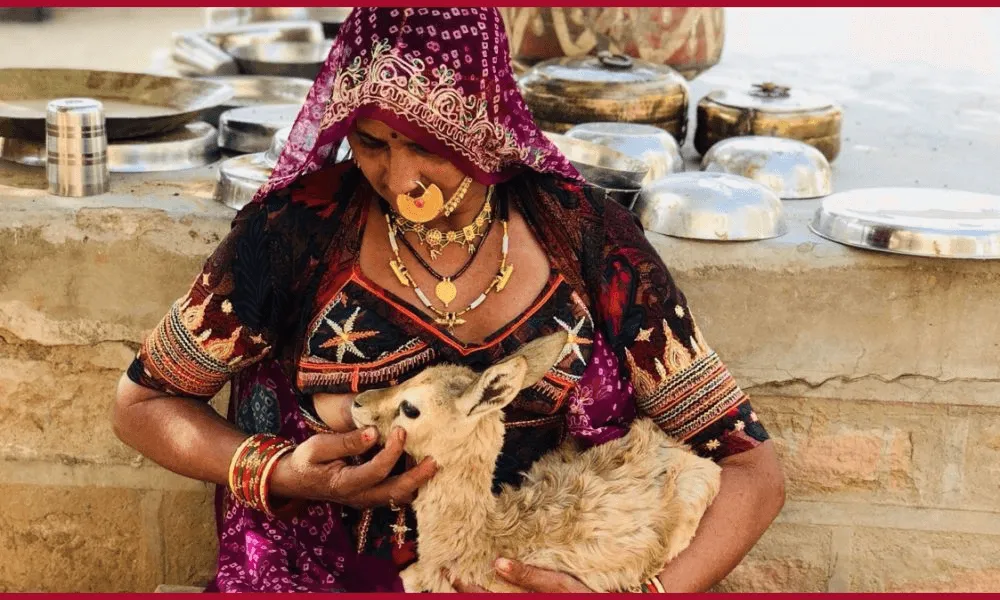
Bishnoi Traditional Attire & Royal Jewelry
Bishnoi clothing reflects both the practical needs of desert farming and the rich regal heritage of Marwar:
Pure White Cottons & Saffron Safa
Bishnoi men traditionally wear loose-fitting pure white cotton *Dhoti* and *Kurta* (or *Chola*). White reflects strong desert sunlight and represents personal cleanliness (Rule 3).
- Safa (Turban): Tying a 9-meter saffron, orange, or deep red turban (*Pagri*) protects the head against heat and signifies honor.
- Murki (Gold Earrings): Small circular gold rings worn in the earlobes by village elders.
Vibrant Ghaghra & Gold Nose Ring (*Nath*)
Bishnoi women wear bright, hand-printed cotton *Ghaghra* (pleated skirts) and *Kanchli* (blouses) paired with an *Odhna* (drape shawl) featuring traditional tie-dye prints.
- Gold Nath (Nose Ring): A large, distinctive gold nose ring worn by married women, symbol of marital blessing.
- Elephant Ivory/Lac Bangles: White bangles (*Kangan*) worn covering the full upper arms.
The Sacred Opium Ceremony (*Amal / Afeem Ritual*)
In the cultural history of Marwar, the Amal Ceremony (Opium Tea distribution) was established as a formal ritual to settle village disputes, welcome honored guests, and celebrate community brotherhood.
Raw opium resin is purified, crushed with cardamom and spices, and filtered through wooden funnels into a liquid blend. The village host offers drops of this ceremonial liquid directly from his cupped palm to guests, who sip it with folded hands as a token of mutual trust and eternal friendship.

Centuries-Old Handloom & Pottery Crafts
On your village safari circuit, interact directly with artisan families who have preserved ancient Marwar crafts for over 5 generations:
Salawas Village Durry Weaving
At Salawas village, 5th-generation master weavers craft durable flat-weave cotton and camel wool carpets (*Durries*) on traditional pit looms. Colored using 100% natural vegetable dyes (pomegranate peel, indigo, turmeric), each carpet takes days of meticulous hand labor.
Kakani Village Terracotta Pottery
At Kakani village, local potters turn local desert clay into eco-friendly water pitchers (*Matkas*), oil lamps (*Diya*), and clay cookware. Guests can sit at the manual spinning wheel and mold wet clay under the potter’s guidance!
Authentic Hospitality With Native Host Bhagirath Bishnoi
In modern tourism, many commercial tour packages substitute real village life with scripted stage performances. As native Bishnoi hosts born and raised in these villages, Bhagirath Bishnoi and our family offer true, unscripted cultural immersion.
When you visit our host home on a private open 4x4 Jeep safari, you sit on traditional woven cots (*Charpais*), enjoy wood-fired Masala Chai, meet elder weavers, and see free-roaming Blackbucks grazing in surrounding yards.

Frequently Asked Questions About Bishnoi Culture
Have specific questions regarding village etiquette, the Opium ceremony, or visiting host homes? Here are clear answers directly from host Bhagirath Bishnoi.
The traditional respectful greeting is "Ram Ram Sa" accompanied by folded hands. Greeting village elders with "Ram Ram Sa" is met with warm Marwari smiles and hospitality.
Yes! Demonstrations of the ancient Opium Amal ritual are available on private safari tours, where host elders explain the historic cultural significance of this Marwari welcome ritual.
Meals are 100% pure vegetarian, cooked over clay stoves (*chulhas*). Menu includes hand-patted Bajra Roti, organic Ker Sangri curry, Gatte ki Sabzi, Desi Ghee, Mathania red chili chutney, and fresh buttermilk (*Chaach*).
Please dress modestly (covering shoulders and knees). Always slip off your shoes before stepping near cooking hearth (*chulha*) areas, and ask permission before taking close-up photos of village women or elders.
Yes! You can purchase handloom Durry rugs in Salawas and clay pottery in Kakani directly from artisan families with 100% voluntary shopping and zero middleman markups.
Experience Authentic Bishnoi Village Culture
Book your private open 4x4 Jeep safari directly with native local host Bhagirath Bishnoi. Enjoy free doorstep hotel pickup across Jodhpur, unfenced Blackbuck wildlife spotting, and genuine village hospitality!