Bishnoi Village Safari Jodhpur
Wildlife Conservation in Rajasthan & Bishnoi Villages
Long before modern national parks and government wildlife acts existed, the Bishnoi community of Rajasthan pioneered grassroots conservation. Discover how 29 sacred eco-vows, the 1730 AD Khejarli sacrifice, and unfenced community sanctuaries protect Blackbucks and desert wildlife.
Conservation Highlights
Grassroots Model- Origin: Founded in 1485 AD by Guru Jambheshwar Ji
- Core Tenet: 29 Sacred Vows Protecting Flora & Fauna
- Milestone: 1730 AD Khejarli Tree Sacrifice (363 Martyrs)
- Habitat: Unfenced Blackbuck Sanctuaries Around Guda Lake
The Roots of Indigenous Conservation in Marwar (1485 AD)
While Western conservation models often rely on fenced national parks guarded by armed rangers, Rajasthan’s Bishnoi community established a radically different model over 500 years ago—**conservation driven by religious faith and community love**.
In 1485 AD, during a severe Thar desert drought, **Guru Jambheshwar Ji** formulated 29 environmental principles (*29 Niyam*). By making tree protection and animal welfare sacred religious commandments, he transformed ordinary villagers into passionate, lifelong guardians of desert ecosystems.
The 1730 AD Khejarli Sacrifice: The World's First Eco-Martyrdom
The pinnacle of wildlife and forest conservation history in Rajasthan occurred in September 1730 AD in Khejarli village. When royal soldiers arrived to cut green *Khejri* trees for palace lime kilns, brave village woman **Amrita Devi Bishnoi** stepped forward.
Uttering her immortal words—"Sar Santey Rookh Rahe To Bhi Sasto Jaan" (If a tree is saved even at the cost of one's head, consider it a small price)—she and 363 villagers hugged the trees, sacrificing their lives.
Key Protected Species Under Bishnoi Conservation
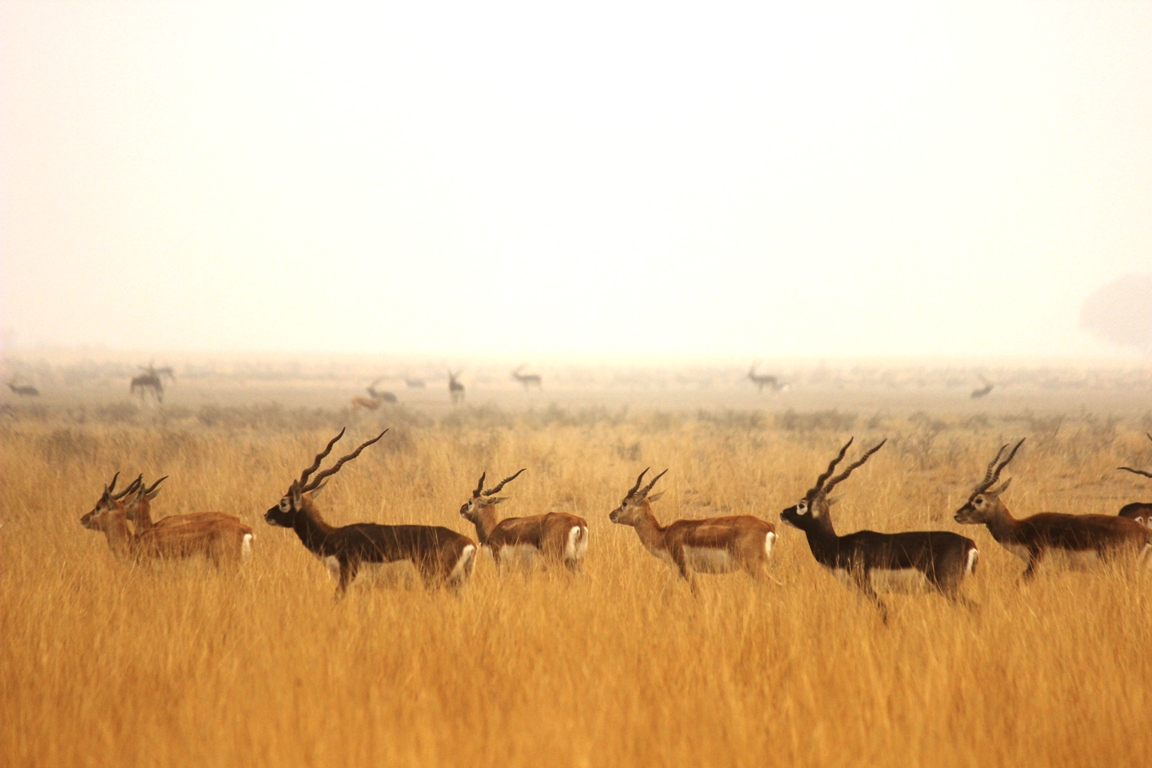
1. Indian Blackbuck (*Kala Hiran*)
Striking antelopes with spiral horns that roam freely in large resident herds across Guda Lake grasslands and Kankani farm borders, protected by local villagers.
2. Indian Gazelle (*Chinkara*)
Rajasthan's State Animal, a sleek desert gazelle adapted to arid sand dunes, surviving on morning dew and acacia foliage without drinking water for days.
3. Demoiselle Cranes (*Kurjan*)
Thousands of migratory Siberian cranes flocking to Guda Bishnoi Lake every winter (Oct–Mar), fed and safeguarded by local Bishnoi farmers.
Community-Led vs Modern National Park Conservation
Compare traditional Bishnoi indigenous conservation with standard government-run wildlife sanctuaries:
| Conservation Feature | Bishnoi Community Model | Standard Government National Park |
|---|---|---|
| Fencing & Barriers | Unfenced: Animals move freely between farms and homes. | Strict high fences, iron gates, and guarded boundaries. |
| Core Motivation | Deep religious faith, spiritual duty (*29 Vows*), and love. | Government legislation, forest laws, and fines. |
| Human-Wildlife Interaction | High harmony; deer drink from water troughs in human yards. | Strict separation between human settlements and wildlife. |
| Food & Water Support | Villagers scatter daily grain and maintain water tanks (*Khels*). | Maintained strictly through natural forest ponds and management. |
How You Experience Conservation On A Bishnoi Village Safari
Unfenced Blackbuck Tracking at Guda Lake
Observe wild Blackbuck antelopes grazing freely in uncultivated fields and near lake shorelines without artificial cages or tourist crowds.
Visit Khejarli Martyr Memorial Park
Pay homage at the sacred site of the 1730 AD tree sacrifice, walking among ancient green Khejri trees and hearing oral history from native guides.
Observe Village Water Troughs (*Khels*)
See concrete water tanks maintained by Bishnoi families specifically to keep wild deer, birds, and stray animals hydrated throughout dry summer months.
Ethical Zero-Chasing Safari Policy
Our open 4x4 Mahindra Thar Jeeps maintain safe, respectful distances from all wildlife, ensuring animals never experience stress or disruption.
Explore Conservation With Native Host Bhagirath Bishnoi
As a born-and-raised native villager whose ancestors grew up preserving this sacred ecosystem, Bhagirath Bishnoi offers an authentic, deeply respectful perspective on wildlife conservation in Rajasthan.
Every private safari booking includes open 4x4 Mahindra Thar Jeep transfers with **free doorstep hotel pickup across Jodhpur**, ensuring a comfortable and educational eco-tour.

Frequently Asked Questions About Wildlife Conservation
Have specific questions regarding wildlife protection, the Bishnoi faith, or safari tours? Here are direct answers from native host Bhagirath Bishnoi.
The Bishnoi community protects wildlife through religious commitment to Guru Jambheshwar Ji's 29 eco-vows (*29 Niyam*), which strictly forbid hunting animals and cutting green trees, maintaining unfenced community sanctuaries.
In 1730 AD, 363 Bishnois led by Amrita Devi sacrificed their lives hugging green Khejri trees to stop them from being cut down, leading to a royal decree banning hunting and tree felling across Bishnoi lands.
No! Unlike government national parks with high fences, wildlife around Bishnoi villages roams 100% wild and free across open farmlands, lake shores, and scrublands.
No! Personal photography and wildlife observation across the Bishnoi village circuit is 100% free with zero hidden park entry or camera permit fees.
You can book directly with native host Bhagirath Bishnoi on WhatsApp or phone at +91 82098 53190. Every booking includes private 4x4 Mahindra Thar Jeep transfers with free doorstep hotel pickup across Jodhpur.
Book Your Private Wildlife Conservation Safari
Reserve your private open 4x4 Jeep safari directly with native local host Bhagirath Bishnoi. Enjoy free doorstep hotel pickup across Jodhpur, unfenced Blackbuck wildlife spotting, Khejarli history, and genuine village hospitality!