Bishnoi Village Safari Jodhpur
Wild Chinkara In Bishnoi Village Jodhpur
Meet the sleek, shy, and graceful Chinkara (Indian Gazelle) roaming freely across the Thar Desert scrublands. Discover how this desert-adapted gazelle survives extreme summer heat without drinking water for days, protected passionately by the Bishnoi community under Guru Jambheshwar Ji’s sacred 18th vow.
Chinkara Quick Facts
Desert Master- Scientific Name: *Gazella bennettii* (Indian Gazelle)
- Status: State Animal of Rajasthan (100% Protected)
- Prime Spotting Slot: 06:00 AM Morning Safari
- Best Zones: Guda Sand Tracks, Salawas & Khejarli
Understanding The Indian Gazelle (*Chinkara*)
Smaller and more shy than the Blackbuck, the Chinkara is perfectly engineered for survival in dry Thar desert sand dunes and acacia scrublands.
Reddish-Buff Camouflage Coat
Chinkaras feature a sleek, light chestnut-buff coat with white underparts and dark facial stripes. Their sandy coloration allows them to blend invisibly into Thar desert dunes.
Both Males & Females Have Horns
Unlike Blackbucks where only males possess horns, both male and female Chinkaras have horns. Male horns are ribbed and curve slightly backward (25–30 cm).
Extreme Desert Water Efficiency
Chinkaras can survive for long periods without drinking water directly! They extract essential moisture from morning dew, succulents, and desert plants (*Ker & Sangri*).
Solitary & Small Family Pairs
While Blackbucks move in large open herds (30+), Chinkaras prefer living individually, in mating pairs, or small family groups of 2 to 6 animals in dry scrubland.
Chinkara vs Blackbuck Comparison
On your private open 4x4 Jeep tour across Bishnoi villages, you will see both species. Here is how to distinguish them instantly:
| Feature | Chinkara (Indian Gazelle) | Blackbuck (Indian Antelope) |
|---|---|---|
| Coat Color | Light reddish-tan / sandy-buff, camouflage hide. | Chocolate black upper body (males), white underbelly. |
| Horns Presence | Both Males & Females have straight ribbed horns. | Only Males have long spiral corkscrew horns. |
| Group Size | Solitary or small family pairs (2 to 6 animals). | Large open herds (20 to 80+ antelopes). |
| Preferred Habitat | Dry sand dunes, acacia thickets, dry scrubland. | Open green grasslands, lake edges, agricultural fields. |
| Water Needs | Absorbs moisture from plants/dew; can go days without water. | Drinks daily at water troughs (*Khels*) and Guda Lake. |
Desert Masters: How Chinkaras Beat The Thar Heat
The Chinkara is one of Rajasthan's most resilient mammals. During harsh 42°C Thar summer months, water sources vanish across sand dunes.
Chinkaras adapt by concentrating their urine to conserve fluids, resting in the shade of *Khejri* and *Babul* trees during midday heat, and feeding on moisture-rich wild desert melons (*Kachri*) and succulent leaves before dawn.
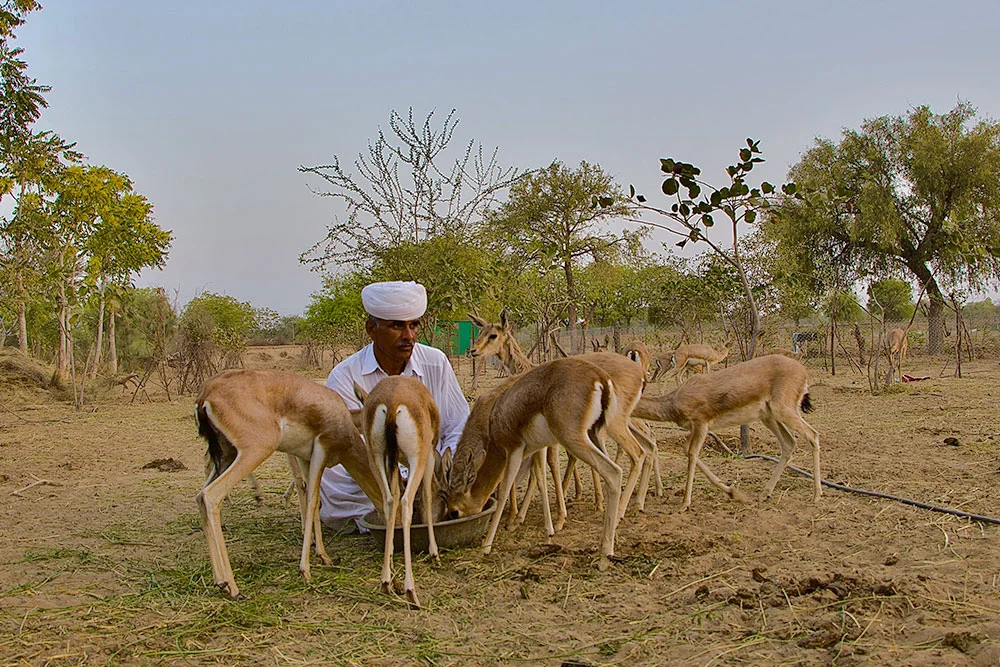
Where To Spot Chinkaras Near Jodhpur
Because Chinkaras favor sandy terrain over flat open fields, our native driver guides navigate off-road sand tracks to these high-density gazelle zones:
1. Guda Bishnoiyan Sand Dune Tracks
The unpaved sandy tracks surrounding Guda Lake scrub forests. Chinkaras browse quietly on acacia leaves in small family pairs during early morning hours.
2. Salawas Village Countryside Scrub
Arid brushland and mustard farm borders near Salawas, where Chinkaras gather near village water troughs (*Khels*) at dawn and sunset.
3. Khejarli Memorial Forest Zone
Shaded groves of ancient Khejri trees where Chinkaras seek relief from the afternoon sun, offering excellent opportunities for peaceful observation.
4. Kakani Pottery Village Trails
Low-lying clay dunes and dry riverbeds where small groups of gazelles graze peacefully near traditional Bishnoi host mud homes.
Pro Tips For Chinkara Wildlife Photography
Chinkaras are small, fast, and extremely alert. Follow these field camera guidelines to capture crisp, stunning gazelle portraits:
1. Use 300mm+ Telephoto Zoom
Chinkaras are naturally shy. Use a **300mm to 400mm telephoto lens** to fill the frame with detailed eye-rings and horn ridges without startling them.
2. High Shutter Speeds (1/1250s)
Chinkaras can leap away in milliseconds. Maintain a fast shutter speed (**1/1250s or faster**) from inside the open 4x4 Jeep to freeze sharp action.
3. Early Morning Soft Light
Book the **06:00 AM Morning Safari**. Soft morning golden sunlight brings out the warm reddish tones in the Chinkara’s sandy camouflage coat.
Ethical Chinkara Tracking With Native Host Bhagirath Bishnoi
As the official State Animal of Rajasthan, the Chinkara holds special protected status under Indian wildlife law and sacred status within the Bishnoi faith.
When you explore the village circuit with native villager Bhagirath Bishnoi, you get an ethical, unscripted wildlife experience. We maintain controlled Jeep speeds (under 30 km/h) and a strict Zero Animal Disturbance Policy, ensuring gazelles remain calm and unharmed.

Frequently Asked Questions About Chinkara Safaris
Have specific questions regarding Chinkara sightings, camera rules, or best safari slots? Here are direct answers from native host Bhagirath Bishnoi.
Yes! Because Chinkaras live in large resident populations across Guda, Salawas, and Khejarli scrublands, and because our native drivers know their exact feeding tracks, you are 100% guaranteed to spot wild Chinkaras and Blackbucks on every safari.
The Chinkara is a smaller, reddish-buff desert gazelle where both males and females have straight ribbed horns. The Blackbuck is a larger antelope where only males have long spiral corkscrew horns and a chocolate-black coat.
The 06:00 AM Morning Safari is best. Chinkaras feed actively on morning dew and succulent desert plants during cool early morning hours before retreating to shaded bushes during midday heat.
No! Personal photography is 100% free throughout the Bishnoi village wildlife circuit with zero hidden permit fees.
You can book directly with native host Bhagirath Bishnoi on WhatsApp or phone at +91 82098 53190. Every booking includes private 4x4 Mahindra Thar Jeep transfers with free doorstep hotel pickup across Jodhpur.
Book Your Private Chinkara Safari Experience
Reserve your private open 4x4 Jeep safari directly with native local host Bhagirath Bishnoi. Enjoy free doorstep hotel pickup across Jodhpur, unfenced Chinkara & Blackbuck wildlife spotting, and genuine village hospitality!